



Hops (Humulus lupulus)
Description
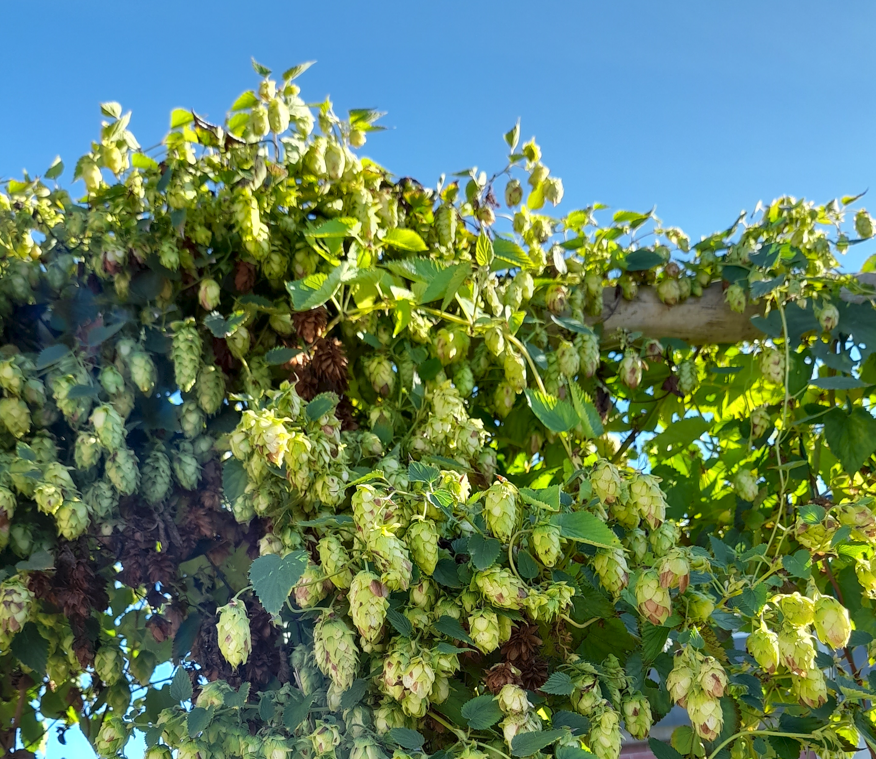
Hops (Humulus lupulus, family Cannabaceae) is a perennial climbing plant best known for its key role in brewing. The parts used are the female cones (also called “strobiles” or “hop cones”), which contain numerous yellow resin glands filled with lupulin, an aromatic powder. Hops provide bitterness, aroma and microbiological stability to beer and are also used in herbal products for their traditional calming and digestive properties.
Common name: Hops
Kingdom: Plantae
Clade: Angiosperms
Clade: Eudicots
Order: Rosales
Family: Cannabaceae
Genus: Humulus
Most common species: Humulus lupulus (common hop)
Cultivation and growing conditions
Climate: Prefers temperate climates with cold winters (needed for dormancy) and warm summers.
Exposure: Requires full sun for vigorous growth and cone production.
Soil: Thrives in well-drained, fertile, slightly acidic to neutral soils rich in organic matter.
Watering: Regular and abundant during spring–summer growth; soil should remain moist but never waterlogged.
Temperature: Handles a wide range of temperatures but benefits from pronounced seasonal variation.
Support: Needs strong vertical support (trellis, poles, wires) as it is a climbing perennial vine.
Pruning: Cut back stems in winter and thin out weaker shoots in early spring to favor strong bines.
Propagation: By rhizome division (most common method), root cuttings, or seeds (less common due to variability).
- The most common species of Humulus are:
- Humulus Lupulus
- Humulus japonicus
- Humulus yunnanensis
Indicative nutritional values per 100 g (fresh cones)
Energy: ≈ 50–60 kcal
Water: ≈ 78–80%
Carbohydrates: ≈ 8–10 g
Protein: 3–4 g
Total fat: 0.5–1 g
SFA (saturated fatty acids; should be limited in the overall diet): traces
MUFA (monounsaturated fatty acids; generally favourable for lipid profile): traces
PUFA (polyunsaturated fatty acids; involved in cellular and anti-inflammatory functions): traces
Dietary fibre: ≈ 6–7 g
Vitamins: B₁, B₆, small amounts of vitamin C
Minerals: calcium, magnesium, potassium
(Values vary with variety, climate, soil and harvest maturity.)
Key constituents
Bitter resins
α-acids (humulones, especially humulone)
β-acids (lupulones)
Essential oils (≈ 0.5–3%)
myrcene, humulene, caryophyllene, farnesene and other terpenes
Polyphenols
flavonoids such as xanthohumol, quercetin, kaempferol derivatives
Lupulin
mixture of resins and essential oils in the yellow glandular powder
Tannins, structural fibres, minor amounts of starch and proteins
Production process
Cultivation
Perennial climbing plant grown on trellis systems (wires, poles, pergolas).
Requires fertile, well-drained soils and adequate irrigation.
Cultivars are selected for α-acid content, aroma profile and agronomic performance.
Harvest
Typically from late August to September in the northern hemisphere.
Only female cones are harvested.
Harvesting can be manual (small scale) or mechanised (commercial hop yards).
Post-harvest
Drying of cones at controlled low temperature to stabilise them and preserve aroma.
Cleaning and grading to remove foreign material and defects.
Production of different product forms:
dried whole cones
pellets (e.g. T90, T45)
hop extracts (CO₂ extracts, isomerised extracts)
Further transformations in brewing
During wort boiling, hop α-acids are isomerised to iso-α-acids, which are the main contributors to beer bitterness.
Late hopping and dry hopping focus more on retaining volatile aroma compounds.
Physical properties
Cone-shaped, papery, lightweight structures, green to yellow-green.
Friable texture when dried.
Intense herbal, resinous aroma.
Pellets have higher bulk density and smaller volume than whole cones.
Essential oil is volatile and oxidation-sensitive, requiring protection from air, light and heat.
Sensory and technological properties
Provides bitterness, aroma and flavour nuances ranging from herbal, resinous and spicy to floral, citrus and tropical fruit notes depending on variety and usage.
Exhibits natural antimicrobial properties, especially against Gram-positive bacteria, helping beer stability.
Contributes to foam stability and, indirectly, to colloidal stability and clarity in beer.
Varieties are often grouped as:
Aroma hops (e.g. Saaz, Hallertau, Fuggle)
Bittering hops (e.g. Nugget, Magnum)
Dual-purpose hops (e.g. Cascade, Centennial, Mosaic)
Food applications
Brewing (primary use):
bittering (boiling additions)
aroma and flavour (late kettle additions, whirlpool)
intense aroma and flavour (dry hopping or cold-side additions)
Herbal infusions and teas with relaxing and digestive reputation.
Flavouring of syrups, liqueurs, specialty honeys and some niche culinary recipes (risottos, tempura, sauces).
Nutrition & health
Contains xanthohumol and related prenylated flavonoids with notable antioxidant activity in vitro and in experimental models.
Traditionally used as a mild sedative and for digestive support in herbal medicine.
Polyphenols contribute to antioxidant and antimicrobial activity in food systems, notably beer.
At typical brewing levels, the contribution of hops to overall nutrient intake is small; potential health effects are mainly linked to beer consumption pattern, not hops alone.
Essential oil can be irritant if handled in concentrated form and should always be diluted or properly processed.
Portion note
Brewing: indicative hopping rates ≈ 5–25 g per litre of wort (total hops, all additions), depending on beer style and desired bitterness/aroma.
Herbal teas: typically 1–2 g dried hop cones per cup of hot water.
Allergens and intolerances
Hops do not belong to the list of major EU allergens.
Occupational exposure (dust, pollen, lupulin) can cause respiratory or skin reactions in sensitive workers.
Essential oils and hop extracts may irritate eyes, skin and mucous membranes in high or concentrated exposure.
Storage and shelf-life
Dried whole cones: about 6–12 months under vacuum or modified atmosphere, preferably refrigerated.
Pelletised hops: about 12–24 months when stored sealed under vacuum or inert gas, protected from light and kept cold.
Hop extracts: generally more stable, often 2–3 years under proper storage.
Oxygen, light and heat accelerate oxidation of α-acids and essential oils, with loss of bitterness potential and development of stale aromas.
Safety and regulatory aspects
Must comply with legal limits for:
pesticide residues (MRL)
heavy metals and other contaminants
microbiological criteria for dried plant materials
Hop-processing facilities must adopt GMP and HACCP systems.
Hops, hop products and hop-derived extracts for brewing must meet relevant food-ingredient and additive regulations in the target market.
Labelling
For hops sold to breweries or homebrewers, labels typically specify:
Product name: “hops” (whole cones, pellets or extract).
Variety name (e.g. Cascade, Saaz, Hallertau).
Country or region of origin.
Alpha-acid percentage (and sometimes beta-acids and oil content).
Lot/batch number, best-before date.
Recommended storage conditions (e.g. “keep refrigerated, protect from light and oxygen”).
Troubleshooting
Weak or stale aroma → oxidation due to poor packaging or prolonged storage at warm temperatures.
Harsh, grassy bitterness → excessive hopping rate, poor variety match with style or prolonged exposure of cones to air and light.
Reduced α-acid content over time → natural degradation; adjust dosage or use fresher hops.
Brown, brittle cones with cheesy or rancid smell → advanced oxidation; not suitable for quality brewing.
Sustainability and supply chain
Hop cultivation has a medium water and input demand, but practices such as drip irrigation, integrated pest management and soil-cover crops can reduce environmental impact.
Major hop-growing regions often implement sustainability schemes and certifications.
Plant by-products (stems, leaves) are compostable or can be used as biomass.
Pelletisation and extracts improve logistics, reduce volume and can help reduce waste.
Local hop production for craft breweries supports short supply chains and potentially lower transport-related emissions.
Main INCI functions (cosmetics)
Hops-derived cosmetic ingredients include:
Humulus Lupulus (Hops) Extract – antioxidant, toning, soothing and skin-conditioning functions.
Humulus Lupulus (Hops) Cone Oil – fragrance ingredient with purifying and mildly deodorant properties.
Humulus Lupulus (Hops) Powder – used in some natural masks and scrubs for its botanical and aromatic qualities.
Use levels must comply with cosmetic safety assessments and take into account possible sensitisation in predisposed individuals.
Conclusion
Hops is a botanically and technologically important ingredient, essential in brewing and increasingly valued in herbal and cosmetic fields. Its bitterness, aroma, preservative effects and rich mix of resins, essential oils and polyphenols give it a unique functional and sensory profile. Correct cultivation, drying, processing and cold, oxygen-limiting storage are crucial to preserve its bittering potential, aromatic complexity and overall quality along the supply chain.
Mini-glossary
SFA – Saturated fatty acids; fats that should be moderated due to their association with increased cardiovascular risk.
MUFA – Monounsaturated fatty acids; generally beneficial for blood lipid profile.
PUFA – Polyunsaturated fatty acids; important for cell membranes and anti-inflammatory processes.
MRL – Maximum Residue Level; legal limit for pesticide residues in foods.
GMP – Good Manufacturing Practices; operational standards ensuring hygienic, correct production.
HACCP – Hazard Analysis and Critical Control Points; preventive system for identifying and controlling food-safety hazards.
Studies
Hops: In its composition we find the polyphenols (they exert antioxidant activity), which constitute 3-6% of the dry substance of the cone. Xanthohumol is the most important prenylated chalconium in terms of concentration and biological activity. It constitutes 80-90% of all prenylated flavonoids (1).
It is used in beer processing (the cones of the female hop plants are mainly used as an ingredient for the brewing industry) to give it a bitter taste.
The component responsible for the characteristic scent of the hops is the geranium acid which has unique characteristics. This compound is not an "odour-active", but acts as an enhancer of the terpenoids that give the classic scent (2).
Hop is also used in the pharmaceutical and medical sector as a sedative (3), sleeping pill, pain-reliever.
For more information:

