



Corn / Maize
(From Zea mays, family Poaceae)
Description
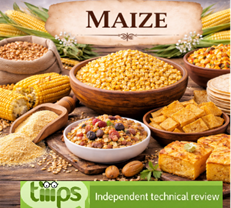
Maize (corn) is a cereal grain originally domesticated in the Americas and now cultivated worldwide.
The kernel consists of pericarp (bran), starchy endosperm and germ, with colours ranging from yellow and white to red and purple in specialty varieties.
In the food industry it is mainly used as dry grain, grits, meals, flours, flakes, starches and syrups (e.g. glucose/fructose syrups) for bakery, snacks, polenta, breakfast cereals, beverages and baby foods.
Indicative nutritional values per 100 g
(yellow maize, dry grain)
Energy: 340–380 kcal
Carbohydrates: 70–75 g
sugars: 1–3 g
starch: 65–72 g
Fibre: 6–10 g (higher in wholegrain products)
Protein: 7–10 g
Lipids: 3–5 g
SFA (first occurrence – saturated fatty acids): 0.5–1 g (excess SFA intake is associated with higher cardiovascular risk, but contribution from plain maize is moderate)
MUFA: 1–1.5 g
PUFA: 1.5–2.5 g (mostly linoleic acid)
TFA: not present in any significant natural amount
Vitamins: B1, B3, B5, B6, folate; small amounts of vitamin E
Minerals: phosphorus, magnesium, potassium; traces of zinc, copper, manganese
Values vary with variety (dent, flint, waxy), degree of refinement (wholegrain vs refined) and processing.
Key constituents
Starch (mainly in the endosperm)
Proteins (zeins, glutelins) with moderate biological value
Lipids concentrated in the germ (linoleic and oleic acid)
Dietary fibre (corn bran: cellulose, hemicellulose, lignin)
Carotenoids (lutein, zeaxanthin) responsible for yellow colour
B-group vitamins and vitamin E (especially in the germ)
Minerals (P, Mg, K)
Phenolic antioxidants (e.g. ferulic acid in the bran)
Production process
(dry grain, grits and flours)
Cultivation and harvest: ears harvested at full physiological maturity.
Drying: reduction of kernel moisture (typically <14%) to ensure storability.
Shelling and cleaning: removal of kernels from cobs; removal of dust, broken kernels and foreign materials.
Storage in silos: controlled humidity and temperature to prevent mould and pests.
Milling:
Dry milling to produce grits, meals and flours (for polenta, snacks, bakery).
Wet milling to separate starch, gluten, fibre and germ (for starch, sweeteners, corn oil).
Optional refining: separation of bran and germ (degerminated corn) or production of wholemeal retaining all fractions.
Thermal treatments (if applicable): precooking, roasting, extrusion (flakes, breakfast cereals, extruded snacks).
Packaging in bags or other suitable containers.
All operations under GMP/HACCP, with control of moisture, pests and contaminants.
Physical properties
Whole kernels: hard or semi-hard, glossy, mostly yellow or white (other colours in specialty types).
Moisture (dry grain): approx. 12–14%
Bulk density: typically 700–800 g/L for grain; lower for grits and flours.
Solubility: starch is insoluble in cold water but gelatinises when heated.
Stability: good if properly dried and protected from moisture and infestation.
Sensory and technological properties
Flavour: mild, slightly sweet, cereal-like.
Colour: pale to deep yellow depending on carotenoid content.
Technological functionalities:
corn starch provides gelatinisation, thickening and structure in cooked products;
grits are suitable for polenta, extruded snacks, breakfast cereals;
corn flour gives colour, crispness and a sandy crumb texture in baked goods;
corn bran increases fibre and contributes texture.
Food applications
Cereal products:
polenta, cornmeal porridges, corn breads, flatbreads;
tortillas, taco shells, chips (often after nixtamalisation in Latin American traditions).
Snacks and breakfast cereals:
corn flakes, puffed corn, extruded snacks, corn sticks, crackers.
Functional ingredients:
corn starch as a thickener in sauces, soups, creams, desserts and dairy products;
modified starches for specific performance (heat, acid, freeze–thaw stability).
Baby foods: cereal-based infant foods using corn flour or grits.
Other uses:
production of glucose / high-fructose corn syrups via hydrolysis and isomerisation of starch;
ingredient in plant-based products as a carbohydrate and structure source.
Nutrition & health
Source of complex carbohydrates and energy with relatively gradual release.
Protein content is moderate; amino acid profile is lysine limiting, so corn is often combined with other cereals or legumes for balance.
Yellow varieties provide carotenoids (lutein, zeaxanthin) with antioxidant roles.
Wholegrain forms provide significant fibre for digestive health.
Corn germ is rich in PUFA and vitamin E (when germ is retained or oil is used).
Glycaemic impact depends on refinement, particle size and cooking (e.g. dense polenta vs instant corn creams).
Portion note
Cooked cereal preparations (polenta, porridges):
typically 60–80 g dry grits/flour per person, giving roughly 180–250 g cooked product.
In bakery/snacks:
corn grits/flour generally make up 5–60% of formula depending on product (e.g. pure corn snacks vs mixed breads).
Allergens & intolerances
Corn is not a major allergen in most regulations, though rare allergies to corn proteins exist.
It is naturally gluten-free, suitable for coeliac diets if grown, milled and packed under conditions that avoid cross-contamination with gluten-containing cereals.
Individual intolerances must be evaluated based on the finished product and all its ingredients.
Storage & shelf-life
Dry grain:
stored in silos or bags in cool, dry, well-ventilated conditions;
moisture <14% to prevent mould and mycotoxin formation;
shelf-life: many months, often up to 12 months or more if well managed.
Flours and grits:
more sensitive to oxidation (especially if germ is present) and moisture;
must be kept in moisture- and oxygen-barrier packaging;
typical shelf-life: 6–12 months, shorter for wholemeal or germ-containing products.
Main risks:
Mould growth and mycotoxins (e.g. fumonisins, aflatoxins) if moisture/temperature are not properly controlled.
Insect infestation (weevils, grain moths), preventable via good integrated pest management.
Safety & regulatory
Subject to legal limits for:
mycotoxins (aflatoxins, fumonisins, zearalenone, etc.),
pesticide residues,
heavy metals.
Must comply with hygienic standards for cereal products (microbial load, absence of pathogens).
Production under GMP/HACCP, with full traceability from field to final ingredient.
For products aimed at infants and vulnerable groups, stricter contaminant limits apply.
Labeling
Typical names:
“maize” or “corn”,
“corn flour”,
“cornmeal”,
“corn grits”,
“corn bran”.
In compound foods, listed in descending order of weight.
For gluten-free products, “gluten-free” can be claimed only if analytical limits are met.
When used as starch/syrups, specific ingredients appear (e.g. “corn starch”, “glucose syrup (from corn)”, “high-fructose corn syrup” where applicable).
Troubleshooting
Mouldy odour or visible mould:
moisture and/or temperature too high during storage → improve drying, aeration, and silo management.
Insect infestation:
insufficient pest control → implement integrated pest management and monitoring.
Rapid rancidity in flour:
presence of germ and poor storage → use degerminated flour or improve packaging and logistics.
Poor texture in baked goods:
excessive corn flour (no gluten network) → rebalance with other flours or use binders/hydrocolloids.
Sustainability & supply chain
Maize is a high-yield crop but may have significant environmental impacts related to:
fertiliser and pesticide use,
water consumption (depending on climate and irrigation),
soil erosion risk.
Sustainability can be improved through:
integrated and precision agriculture,
crop rotations,
efficient water and nutrient management.
In processing plants:
wastewater and process water must be treated and monitored using BOD/COD indices;
by-products (bran, fibre, germ, cobs) can be valorised as feed, bioenergy or biobased materials.
Main INCI functions (cosmetics)
(as “Zea Mays Starch”, “Zea Mays Kernel Extract”, “Zea Mays Germ Oil”)
Zea Mays Starch:
absorbent (sebum and moisture in powders, deodorants, make-up),
bulking agent and viscosity regulator.
Zea Mays Kernel Extract:
skin conditioning (provides sugars and humectant components).
Zea Mays Germ Oil:
emollient, rich in PUFA and vitamin E.
Used in body care, facial care, powder make-up and “natural” cosmetic lines.
Conclusion
Maize/corn is an extremely versatile and widely used cereal, forming the basis of grains, flours, grits, starches and syrups.
Technologically it provides structure, body, colour and thickening functions, while nutritionally it supplies complex carbohydrates, fibre in wholegrain form and several micronutrients.
When grown and processed in well-managed supply chains and under GMP/HACCP, maize is a safe, stable and high-quality ingredient suitable for a broad range of food applications, from traditional polenta and tortillas to modern snacks and plant-based products.
Mini-glossary
SFA – Saturated fatty acids: fats associated with increased cardiovascular risk when consumed in excess; maize contains only modest amounts in its native lipid fraction.
MUFA – Monounsaturated fatty acids: generally neutral or beneficial fats present in corn germ oil.
PUFA – Polyunsaturated fatty acids: include essential fatty acids (e.g. linoleic acid), abundant in corn germ oil but more prone to oxidation.
TFA – Trans fatty acids: associated with negative health effects when industrial; not a significant natural component of maize.
GMP/HACCP – Good Manufacturing Practices / Hazard Analysis and Critical Control Points, management systems ensuring hygiene, safety and quality.
BOD/COD – Biological / Chemical Oxygen Demand, indicators of the organic and chemical load of industrial wastewater, used to assess environmental impact.
Studies
The results of this study suggest that even though there were pigment losses, creole maize pigments show antioxidant and antimutagenic activities after nixtamalization process (1).
From corn they are industrially extracted:
- Fructose syrup or HFCS (High Fructose Corn Syrup)
- Glucose syrup
- Glucose-fructose syrup
- Maize syrup (unusual diction as the content should be specified, whether fructose or glucose. Glucose is sugar, so a component to be taken in moderation. Fructose is a low-calorie carbohydrate sweetener that, frankly, would be best avoided )
It has a low caloric content.
Suitable for coeliacs.
Also used for animal feed.
Genetically modified crops (GMCs) were first introduced to commercial agriculture in 1996, and approximately 181.5 million hectares of GMCs were grown worldwide in 2014. These GMCs have produced significant benefits over the past two decades (Clive, 2015). A recent meta-analysis by Klumper and Qaim concluded that the wide adoption of GM technology has reduced the usage of chemical pesticides, in addition to increasing crop yields to improve farmers' profits (Wilhelm and Matin, 2014). Despite the obvious positive effects of GMCs, public controversy over on the unintended, unexpected, and uncontrolled negative effects of GMCs are still ongoing. There is considerable concern that the introduction of exogenous DNA sequences and enzymes into the target plant genome in GMCs might result in unintended effects, and these negative effects may affect both human health and the environmental safety (Ioset et al., 2006). Therefore, determination of these potential unintended effects necessary and scientists should perform bio-assessment analyses to guarantee the safety of GMCs (1).

