Geranio edera rosso (Pelargonium peltatum): guida completa a Pelargonium peltatum (coltivazione, cure, problemi comuni)
Descrizione
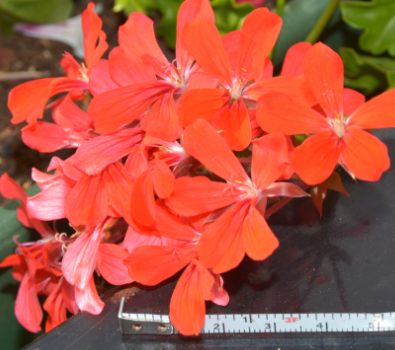
Il geranio edera rosso (Pelargonium peltatum) è una pianta ornamentale della famiglia Geraniaceae, coltivata soprattutto in vasi e fioriere sospese per il suo portamento ricadente e la fioritura abbondante. In coltivazione è spesso gestito come stagionale, ma può comportarsi da perenne in climi miti o se svernato in ambiente protetto. La denominazione “rosso” si riferisce a cultivar selezionate con infiorescenze a tonalità rosse, con intensità variabile in base a luce, nutrizione e temperatura.
Classificazione botanica
Caratteristiche principali della pianta
portamento: ricadente o semiricadente, adatto a balconi e cestini sospesi.
fusti: flessibili e parzialmente succulenti; possono rompersi con vento forte se non ben gestiti.
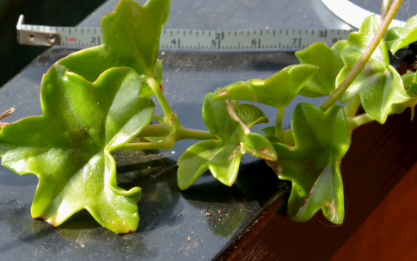
foglie: peltate, lisce, leggermente carnose, con cuticola che limita la perdita d’acqua.
fiori: riuniti in ombrelle; la fioritura è più continua se si rimuovono i capolini appassiti.
sensibilità: soffre ristagno idrico e freddo; tollera meglio brevi periodi di asciutto rispetto all’eccesso di acqua.
Composizione chimica e struttura
pigmenti: i fiori rossi dipendono principalmente da antociani (flavonoidi), modulati da luce e nutrienti.
polifenoli: presenza di composti fenolici con ruolo protettivo contro stress e agenti esterni.
componenti volatili: rispetto ad altre specie aromatiche del genere Pelargonium, Pelargonium peltatum è in genere meno rilevante come fonte di frazioni odorose di interesse industriale.
struttura: tessuti con moderata succulenza e cuticola sviluppata, coerenti con la buona gestione della disidratazione in coltivazione.
Coltivazione e cura
Esposizione e clima
esposizione: sole pieno per massimizzare fioritura e compattezza; mezz’ombra nelle aree molto calde per ridurre stress.
temperatura: crescita ottimale in condizioni miti; sotto 5–7 °c può subire danni. In presenza di rischio gelo, è consigliabile svernare in luogo luminoso e riparato.
Terreno e vaso
substrato: requisito chiave è il drenaggio. Utilizzare terriccio per fiorite alleggerito con inerti (perlite, pomice o materiali equivalenti).
vaso: preferire contenitori con fori ampi; evitare sottovasi con acqua stagnante.
Irrigazione
Concimazione
obiettivo: sostenere la fioritura senza eccessi vegetativi.
indicazione: concime per fiorite con adeguato potassio e microelementi; limitare eccesso di azoto che favorisce foglia a scapito dei fiori e aumenta la suscettibilità a stress.
Potatura e gestione della fioritura
rimozione fiori appassiti: migliora continuità di fioritura e riduce rischio di muffe.
cimatura leggera: aumenta ramificazione e densità del cespo.
gestione dei fusti: accorciare quelli troppo lunghi per migliorare ventilazione e ridurre rotture.
Propagazione
Problemi comuni e soluzioni rapide
foglie gialle e fusti molli: spesso eccesso d’acqua o drenaggio insufficiente. Ridurre irrigazioni e migliorare substrato.
poche fioriture: carenza di luce, concime non adeguato o eccesso di azoto. Aumentare esposizione e riequilibrare nutrizione.
muffe su fiori e foglie: umidità alta e scarsa ventilazione. Rimuovere parti colpite e migliorare aerazione.
parassiti: afidi, mosca bianca e ragnetto rosso possono comparire con caldo e stress. Intervenire precocemente con strategie di controllo compatibili con l’uso domestico e con la normativa vigente.
Usi e benefici
uso principale: ornamentale per balconi, terrazzi, fioriere e aiuole.
utilità pratica: copertura rapida di bordi e superfici, con buona resa estetica in contenitore.
nota alimentare: non è una pianta destinata all’uso alimentare.
Applicazioni (mediche, cosmetiche, altre)
mediche: non è una specie comunemente impiegata in fitoterapia standardizzata. Eventuali impieghi tradizionali non costituiscono indicazioni terapeutiche.
cosmetiche: l’interesse cosmetico nel genere Pelargonium riguarda soprattutto specie aromatiche; per Pelargonium peltatum l’uso cosmetico è in genere marginale.
altre: impiego in allestimenti e landscaping in climi miti, con attenzione al controllo del drenaggio e alla gestione invernale.
Considerazioni ambientali e di sicurezza
sicurezza per l’uomo: possibile irritazione cutanea da contatto con linfa in soggetti sensibili; usare guanti durante potature e talee.
sicurezza per animali domestici: ingestione accidentale può causare disturbi gastrointestinali; evitare accesso a cani e gatti inclini a mordicchiare piante.
sostenibilità: preferire gestione basata su prevenzione (drenaggio, ventilazione, irrigazione corretta) per ridurre interventi chimici.
Bibliografia__________________________________________________________________________
Alonso AM, Reyes-Maldonado OK, Puebla-Pérez AM, Arreola MPG, Velasco-Ramírez SF, Zúñiga-Mayo V, Sánchez-Fernández RE, Delgado-Saucedo JI, Velázquez-Juárez G. GC/MS Analysis, Antioxidant Activity, and Antimicrobial Effect of Pelargonium peltatum (Geraniaceae). Molecules. 2022 May 26;27(11):3436. doi: 10.3390/molecules27113436.
Abstract. In recent years, the increase in antibiotic resistance demands searching for new compounds with antimicrobial activity. Phytochemicals found in plants offer an alternative to this problem. The genus Pelargonium contains several species; some have commercial use in traditional medicine such as P. sinoides, and others such as P. peltatum are little studied but have promising potential for various applications such as phytopharmaceuticals. In this work, we characterized the freeze-dried extracts (FDEs) of five tissues (root, stem, leaf, and two types of flowers) and the ethyl acetate fractions from leaf (Lf-EtOAc) and flower (Fwr-EtOAc) of P. peltatum through the analysis by thin-layer chromatography (T.L.C.), gas chromatography coupled to mass spectrometry (GC-MS), phytochemicals quantification, antioxidant capacity, and antimicrobial activity. After the first round of analysis, it was observed that the FDE-Leaf and FDE-Flower showed higher antioxidant and antimicrobial activities compared to the other FDEs, for which FDE-Leaf and FDE-Flower were fractionated and analyzed in a second round. The antioxidant activity determined by ABTS showed that Lf-EtOAc and Fwr-EtOAc had the lowest IC50 values with 27.15 ± 1.04 and 28.11 ± 1.3 µg/mL, respectively. The content of total polyphenols was 264.57 ± 7.73 for Lf-EtOAc and 105.39 ± 4.04 mg G.A./g FDE for Fwr-EtOAc. Regarding the content of flavonoid, Lf-EtOAc and Fw-EtOAc had the highest concentration with 34.4 ± 1.06 and 29.45 ± 1.09 mg Q.E./g FDE. In addition, the minimum inhibitory concentration (M.I.C.) of antimicrobial activity was evaluated: Lf-EtOAc and Fwr-EtOAc were effective at 31.2 µg/mL for Staphylococcus aureus and 62.5 µg/mL for Salmonella enterica, while for the Enterococcus feacalis strain, Fwr-EtOAc presented 31.2 µg/mL of M.I.C. According to the GC-MS analysis, the main compounds were 1,2,3-Benzenetriol (Pyrogallol), with 77.38% of relative abundance in the Lf-EtOAc and 71.24% in the Fwr-EtOAc, followed by ethyl gallate (13.10%) in the Fwr-EtOAc and (Z)-9-Octadecenamide (13.63% and 6.75%) in both Lf-EtOAc and Fwr-EtOAc, respectively.
Coronado-López S, Caballero-García S, Aguilar-Luis MA, Mazulis F, Del Valle-Mendoza J. Antibacterial Activity and Cytotoxic Effect of Pelargonium peltatum (Geranium) against Streptococcus mutans and Streptococcus sanguinis. Int J Dent. 2018 Nov 28;2018:2714350. doi: 10.1155/2018/2714350.
Abstract. Objective: To evaluate the in vitro antibacterial and cytotoxic properties of the methanolic extract of Pelargonium peltatum (geranium) against Streptococcus mutans (ATCC 25175) and Streptococcus sanguinis (ATCC 10556). Methods: Three extracts of P. peltatum were prepared using the leaf, stem, and root. Nine independent assays were prepared for each type of extract with chlorhexidine at 0.12% as the positive control. The agar diffusion method was performed to determine the antibacterial properties of each extract. The minimum inhibitory concentration (MIC) was determined using the microdilution method, and the cytotoxicity was analyzed by means of the MTT reduction test using a MDCK cell line. Results: The root extract had the highest antibacterial effect with a mean result of (27.68 ± 0.97) mm and (30.80 ± 0.55) mm against S. mutans and S. sanguinis, respectively. The minimum inhibitory concentration for the leaf and root extracts was 250 mg/mL for S. mutans and 125 mg/mL for S. sanguinis. Cytotoxicity assays showed that both extracts had a low cytotoxicity at high concentrations. The cellular viability was highest for the root extract at 95.3% followed by the stem extract at 80.8% and finally the leaf extract with 75.4%. Conclusions: These findings show the antibacterial properties of the methanolic extracts of P. pelargonium against S. mutans and S. sanguinis. These extracts were not cytotoxic at high concentrations.
Perner H, Schwarz D, Bruns C, Mäder P, George E. Effect of arbuscular mycorrhizal colonization and two levels of compost supply on nutrient uptake and flowering of pelargonium plants. Mycorrhiza. 2007 Jul;17(5):469-474. doi: 10.1007/s00572-007-0116-7.
Abstract. Two challenges frequently encountered in the production of ornamental plants in organic horticulture are: (1) the rate of mineralization of phosphorus (P) and nitrogen (N) from organic fertilizers can be too slow to meet the high nutrient demand of young plants, and (2) the exclusive use of peat as a substrate for pot-based plant culture is discouraged in organic production systems. In this situation, the use of beneficial soil microorganisms in combination with high quality compost substrates can contribute to adequate plant growth and flower development. In this study, we examined possible alternatives to highly soluble fertilizers and pure peat substrates using pelargonium (Pelargonium peltatum L'Her.) as a test plant. Plants were grown on a peat-based substrate with two rates of compost addition and with and without arbuscular mycorrhizal (AM) fungi. Inoculation with three different commercial AM inocula resulted in colonization rates of up to 36% of the total root length, whereas non-inoculated plants remained free of root colonization. Increasing the rate of compost addition increased shoot dry weight and shoot nutrient concentrations, but the supply of compost did not always completely meet plant nutrient demand. Mycorrhizal colonization increased the number of buds and flowers, as well as shoot P and potassium (K) concentrations, but did not significantly affect shoot dry matter or shoot N concentration. We conclude that addition of compost in combination with mycorrhizal inoculation can improve nutrient status and flower development of plants grown on peat-based substrates.