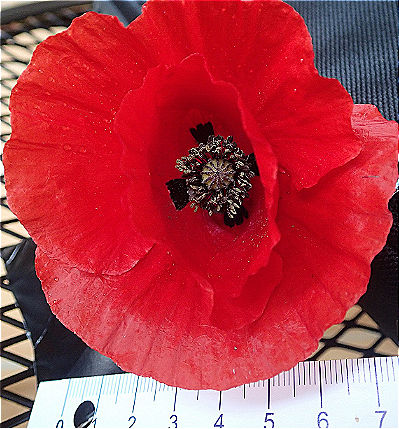
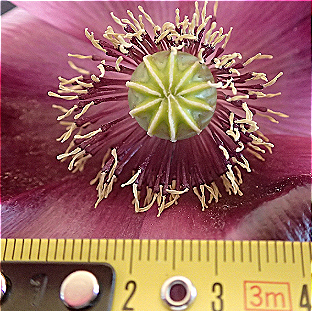
Red poppy (Papaver rhoeas – family Papaveraceae)
Description
Red poppy (Papaver rhoeas) is a spontaneous annual herbaceous plant widely distributed across Europe and the Mediterranean basin. It commonly grows in cultivated fields, roadsides, and uncultivated land and is easily recognized by its bright red flowers, which bloom mainly from spring to early summer.
The plant develops a slender, hairy stem, lobed leaves, and an oval capsule containing numerous small seeds. Unlike Papaver somniferum, red poppy is not cultivated for large-scale food seed production and is primarily associated with ornamental, traditional, and herbal uses.
From a compositional point of view, the petals contain anthocyanin pigments, flavonoids, and mucilages, which are responsible for the intense coloration and functional properties. The plant also contains non-narcotic alkaloids, such as rhoeadine, which do not exhibit opioid activity. Traditionally, the petals have been used in mild infusions and traditional preparations, while the seeds, although edible, have a limited culinary role.
Overall, red poppy use is mainly qualitative and linked to traditional practices, with a focus on its natural bioactive compounds rather than on direct nutritional contribution.
Classification
| Level | Classification |
|---|
| Origin | Plant-based |
| Species | Papaver rhoeas |
| Botanical family | Papaveraceae |
| Category | Annual herbaceous plant |
| Main used part | Petals |
Plant and raw material characteristics
| Aspect | Description |
|---|
| Plant type | Annual herb |
| Average height | 30–80 cm |
| Flowers | Intense red |
| Leaves | Lobed, hairy |
| Fruit | Capsule |
| Used parts | Petals, occasionally seeds |
| Form of use | Fresh or dried |
| Allergens | None known |
Indicative average nutritional values per 100 g
| Component | Average value |
|---|
| Energy | 50 kcal |
| Water | 85.0 g |
| Protein | 2.0 g |
| Carbohydrates | 7.5 g |
| of which sugars | 3.0 g |
| Dietary fiber | 2.8 g |
| Fat | 0.6 g |
| Vitamin C | 20 mg |
| Potassium | 210 mg |
| Calcium | 160 mg |
Average values referring to fresh petals. Natural variability may occur depending on location and environmental conditions.
Note on nutritional use of the bioactive compounds present
Red poppy petals contain anthocyanins and flavonoids with antioxidant activity, as well as mucilages traditionally associated with soothing properties. Vitamin C contributes to normal physiological functions and cellular protection. Food use is limited and complementary, with a role that is mainly functional and traditional, suitable for inclusion in a balanced diet when used appropriately.
Cultivation and growing conditions
Climate
Hardy annual plant typical of temperate climates.
Optimal growth temperature: 10–22 °C.
Tolerates cold well during early growth stages and withstands light frosts.
Prolonged high temperatures, especially during flowering, reduce performance.
Exposure
Soil
Adapts well to poor to moderately fertile soils, provided they are well drained.
Ideal texture: loam or sandy-loam.
Optimal pH: 6.0–7.5.
Avoid compacted soils and waterlogging.
Irrigation
Requires minimal irrigation.
After seedling establishment, it generally relies on natural soil moisture.
Water only in cases of prolonged drought.
Excess water increases the risk of root rot.
Fertilization
Does not require specific fertilization.
Overly rich soils promote vegetative growth at the expense of flowering.
In very poor soils, a light application of well-matured organic matter may be beneficial.
Crop care
Requires minimal intervention.
Weed control is only necessary during early growth stages.
Does not tolerate transplanting; direct sowing is essential.
Highly adaptable species with spontaneous growth behavior.
Harvest
Flowers are harvested at the beginning of full bloom.
Petals intended for traditional uses should be collected dry.
Seeds are harvested when capsules are fully mature.
Propagation
Exclusively by seed.
Direct sowing in autumn or late winter–early spring.
Germination is rapid under suitable conditions.
Shallow sowing improves seedling emergence.
How to grow it
Ideal for wildflower meadows, naturalistic borders, and low-input plantings.
Generally unsuitable for container cultivation.
Easily self-seeds if allowed to complete its life cycle.
Simple management ensures abundant, natural flowering.