

Ciao, Visitatore!


  Oggetti Tiiips Categorie
Santoreggia
"Descrizione"
di AColumn (9402 pt)
26-nov-2025 08:47

Consenso relazione: 10 Media gradimento: 10 Numero utenti: 1
Valutazione  N. EspertiValutazione  N. Esperti
1
  
6
  
2
  
7
  
3
  
8
  
4
  
9
  
5
  
10
  1

Santoreggia (Satureja hortensis / Satureja montana)


Descrizione

La santoreggia è un’erba aromatica appartenente alla famiglia delle Lamiaceae. Le due specie più diffuse sono Satureja hortensis (annuale, più delicata) e Satureja montana (perenne, più intensa e resinosa). La pianta presenta steli sottili e legnosi alla base, foglie piccole e lanceolate molto aromatiche e piccoli fiori bianco-rosati. È apprezzata per il suo aroma caldo, pepato e leggermente pungente, simile al timo ma più deciso. È utilizzata da secoli nella cucina mediterranea, nelle conserve, nei legumi e nelle carni.
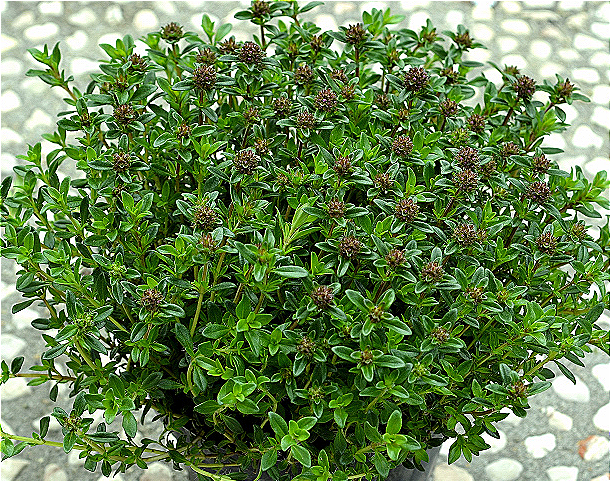
Nome comune: Santoreggia
Regno: Plantae
Clado: Angiosperme
Clado: Eudicotiledoni
Clado: Asteridi
Ordine: Lamiales
Famiglia: Lamiaceae
Genere: Satureja
Specie principali:

  • Satureja hortensis — santoreggia annuale

  • Satureja montana — santoreggia montana (perenne)


Valori nutrizionali indicativi per 100 g (foglie fresche)

  • Energia: ≈ 50–70 kcal

  • Acqua: ≈ 70–75%

  • Carboidrati: ≈ 8–12 g

    • zuccheri: 1–2 g

  • Proteine: 3–6 g

  • Grassi totali: 1–2 g

    • SFA: tracce

    • MUFA: tracce

    • PUFA: tracce

  • Fibre: 6–8 g

  • Vitamina C: presente in quantità moderate

  • Vitamine: A (β-carotene), K, piccole quantità di vitamine del gruppo B

  • Minerali: calcio, ferro, magnesio, potassio

(Valori indicativi variabili secondo specie, suolo, stato di freschezza.)


Principali sostanze contenute

  • Olio essenziale: carvacrolo, timolo, p-cimene, γ-terpinene, linalolo, borneolo.

  • Polifenoli: flavonoidi (apigenina, luteolina, quercetina).

  • Tannini e composti fenolici con attività antiossidante.

  • Fibre alimentari (soprattutto nelle foglie essiccate).

  • Piccole quantità di vitamine liposolubili e idrosolubili.


Processo di produzione

Coltivazione

  • Semina in primavera (per S. hortensis) o trapianto di piantine per la specie perenne (S. montana).

  • Richiede terreni leggeri, ben drenati, con buona esposizione solare.

  • Irrigazione moderata: la pianta non tollera ristagni idrici.

Raccolta

  • Foglie e sommità fiorite raccolte nel periodo di massima aromaticità (estate).

  • Taglio manuale o con piccole attrezzature per non danneggiare gli steli.

Post-raccolta

  • Pulizia, selezione e essiccazione (ombra e ventilazione o essiccatori a bassa temperatura).

  • Eventuale triturazione e confezionamento come erba secca.

Altre trasformazioni

  • Estrazione dell’olio essenziale tramite distillazione in corrente di vapore.

  • Produzione di miscele di erbe, condimenti e conserve aromatizzate.


Proprietà fisiche

  • Foglie piccole, strette, verde scuro.

  • Aroma molto intenso e persistente.

  • Ottima stabilità da essiccata (bassa attività dell’acqua).

  • Olio essenziale fortemente volatile e concentrato.


Proprietà sensoriali e tecnologiche

  • Aroma: pepato, caldo, timoide, leggermente pungente.

  • Sapore: aromatico, speziato, con nota leggermente amara se in eccesso.

  • In cottura conserva bene l’aroma ed è adatta a cotture lunghe.

  • Le foglie essiccate hanno un aroma più deciso rispetto a quelle fresche.

  • Favorisce la digestione dei legumi e riduce la percezione di note solforate.


Impieghi alimentari

  • Aromatizzazione di legumi (lenticchie, ceci, fagioli).

  • Condimento di carni bianche, arrosti, selvaggina, pesce.

  • Aggiunta a minestroni, salse, condimenti, oli aromatici.

  • Impiego nelle conserve (olive, verdure sott’olio, aceti aromatizzati).

  • Uso nelle miscele di erbe (erbe di Provenza).


Nutrizione e salute

  • Fonte di antiossidanti (carvacrolo, timolo, flavonoidi).

  • Tradizionalmente considerata digestiva, carminativa e antisettica (proprietà dell’olio essenziale).

  • L’olio essenziale presenta attività antimicrobica e antiossidante, ma va usato con moderazione e sempre diluito.

  • Apporto calorico molto basso per porzioni culinarie.

  • Le fibre e i polifenoli contribuiscono alla salute intestinale nell’ambito di una dieta equilibrata.


Nota porzione

Uso tipico: 1–2 g di foglie essiccate o 5–10 g di foglie fresche per porzione.


Allergeni e intolleranze

  • Non contiene allergeni principali UE.

  • Possibili reazioni crociate in soggetti allergici ad altre Lamiaceae (timo, origano).

  • L’olio essenziale può risultare irritante per mucose e pelle se usato puro.


Conservazione e shelf-life

  • Fresca: 3–5 giorni in frigorifero, in contenitore traspirante.

  • Essiccata: fino a 12–18 mesi in barattolo chiuso, al riparo da luce e umidità.

  • Olio essenziale: stabile 1–2 anni se conservato in vetro scuro a temperatura costante.


Sicurezza e regolatorio

  • Deve rispettare i limiti UE relativi a:

    • MRL (residui di pesticidi)

    • contaminanti microbiologici

    • presenza di corpi estranei e impurità

  • Gli stabilimenti di lavorazione devono applicare GMP e HACCP.

  • Gli oli essenziali sono regolati da normative specifiche per uso alimentare e cosmetico.


Etichettatura

Per il prodotto alimentare:

  • Nome: “santoreggia” o Satureja hortensis / montana.

  • Origine (paese).

  • Lotto e TMC (soprattutto per prodotto essiccato).

  • Eventuali indicazioni di uso.

Per miscele o oli essenziali:

  • Elenco ingredienti, quantità, avvertenze d’uso.


Troubleshooting

  • Aroma debole → essiccazione troppo prolungata o stoccaggio scorretto.

  • Foglie scure o spezzettate → qualità bassa o degradazione ossidativa.

  • Presenza di umidità → rischio muffe; necessita ri-essiccazione o scarto.

  • Sapore eccessivamente pungente → quantità troppo elevata in ricetta.


Sostenibilità e filiera

  • Coltivabile con tecniche a basso impatto (minima irrigazione, terreni poveri).

  • Ottima resa aromatica anche in suoli asciutti → minore esigenza di risorse idriche.

  • Facilmente coltivabile localmente → filiera corta e ridotto impatto di trasporto.

  • Scarti completamente compostabili.

  • Imballaggi: preferibili barattoli di vetro o carta riciclabile per il prodotto essiccato.


Principali funzioni INCI (cosmesi)

Da Satureja hortensis o S. montana si ottengono estratti e oli essenziali impiegati in cosmetica:

  • Antimicrobial (grazie a carvacrolo e timolo).

  • Antiossidante.

  • Purificante e deodorante.

  • Toning e rivitalizzante.

  • Utilizzato come fragrance ingredient in prodotti aromatici.

(Da usare entro limiti di sicurezza per i composti potenzialmente irritanti.)


Conclusione

La santoreggia è un’erba aromatica potente, dal profilo sensoriale complesso e ricca di composti bioattivi. È un ingrediente versatile, tradizionale nella cucina mediterranea, capace di arricchire legumi, carni, salse e conserve. La sua elevata concentrazione aromatica consente impieghi a dosi ridotte, mentre la robustezza agronomica la rende una coltura sostenibile. Una corretta gestione della filiera, dal raccolto alla conservazione, garantisce qualità e sicurezza del prodotto finale.


Mini-glossario

  • SFA: grassi saturi

  • MUFA: grassi monoinsaturi

  • PUFA: grassi polinsaturi

  • MRL: Maximum Residue Level

  • GMP: Good Manufacturing Practices

  • HACCP: Hazard Analysis and Critical Control Points

Bibliografia__________________________________________________________________________

Fierascu I, Dinu-Pirvu CE, Fierascu RC, Velescu BS, Anuta V, Ortan A, Jinga V. Phytochemical Profile and Biological Activities of Satureja hortensis L.: A Review of the Last Decade. Molecules. 2018 Sep 25;23(10):2458. doi: 10.3390/molecules23102458.

Abstract. Satureja hortensis L. (summer savory) is an annual herbaceous crop, native to Europe and in our days spread and used all over the world. Although its use as spice and medicinal plant is known since ancient times, peer-reviewed studies presenting the scientific data are scarce. The natural products obtained from summer savory (extracts and essential oil) are dominated by polyphenols and flavonoids, responsible for their antioxidant, antimicrobial, antiparasitic, pesticidal, anti-inflammatory, analgesic, hepatoprotective and anticancer properties, among others. The current study presents the progress made in the last decade regarding the potential applications of summer savory, being the first review study focused on S. hortensis, in the same time suggesting future research opportunities, as they appear from the properties of other Satureja species. The available data presenting the properties of summer savory represents a scientific support for application in industry, for developing "clean label" food products.

Ebadollahi A, Naseri B, Aghcheli A, Setzer WN. Insecticidal Efficacy of Satureja hortensis L. and Satureja khuzistanica Jamzad Essential Oils Against Callosobruchus maculatus (F.). Plants (Basel). 2025 Oct 3;14(19):3062. doi: 10.3390/plants14193062.

Abstract. The cowpea weevil, Callosobruchus maculatus (F.), stands out as one of the most destructive field-to-storage pests of leguminous crops. This study investigates the potential of essential oils derived from two Satureja species, Satureja hortensis L. and Satureja khuzistanica Jamzad, for managing C. maculatus. Bioassay results revealed that both S. hortensis (72 h LC50 = 0.20 µL/g) and S. khuzistanica (72 h LC50 = 0.19 µL/g) essential oils exhibited significant toxicity against C. maculatus adults. The essential oils extended development time, reduced adult longevity, and decreased fecundity of the pest. Key population parameters, including intrinsic growth rate (r) and net reproductive rate (R0), were significantly lowered, particularly by S. hortensis essential oil. Age-specific survival (lx) and fecundity (mx) rates were also declined in treated groups, with delayed reproductive peaks compared to controls. Chemical analyses of S. hortensis and S. khuzistanica essential oils indicated that carvacrol (30.9% and 62.9%, respectively), γ-terpinene (25.5% and 4.3%), p-cymene (9.7% and 7.9%), and thymol (3.7% and 9.3%) were the major components. Hierarchical cluster analysis (HCA) was carried out to compare and contrast the compositions with previous works. The results demonstrated that S. hortensis and S. khuzistanica essential oils, given their lethal and sublethal effects against C. maculatus, can be introduced as natural alternatives to hazardous chemical insecticides, highlighting the need for further research in this field.

Zeidán-Chuliá F, Keskin M, Könönen E, Uitto VJ, Söderling E, Moreira JC, Gürsoy UK. Antibacterial and antigelatinolytic effects of Satureja hortensis L. essential oil on epithelial cells exposed to Fusobacterium nucleatum. J Med Food. 2015 Apr;18(4):503-6. doi: 10.1089/jmf.2013.0052. 

Abstract. The present report examined the effects of essential oils (EOs) from Satureja hortensis L. and Salvia fruticosa M. on the viability and outer membrane permeability of the periodontopathogen Fusobacterium nucleatum, a key bacteria in oral biofilms, as well as the inhibition of matrix metalloproteinase (MMP-2 and MMP-9) activities in epithelial cells exposed to such bacteria. Membrane permeability was tested by measuring the N-phenyl-1-naphthylamine uptake and bacterial viability by using the commercially available Live/Dead BacLight kit. In addition, gelatin zymography was performed to analyze the inhibition of F. nucleatum-induced MMP-2 and MMP-9 activities in HaCaT cells. We showed that 5, 10, and 25 μL/mL of Sat. hortensis L. EO decreased the ratio of live/dead bacteria and increased the outer membrane permeability in a range of time from 0 to 5 min. Treatments with 10 and 25 μL/mL of Sal. fruticosa M. also increased the membrane permeability and 5, 10, and 25 μL/mL of both EOs inhibited MMP-2 and MMP-9 activities in keratinocytes induced after exposure of 24 h to F. nucleatum. We conclude that antibacterial and antigelatinolytic activities of Sat. hortensis L. EO have potential for the treatment of periodontal inflammation.

Bimbiraitė-Survilienė K, Stankevičius M, Šuštauskaitė S, Gęgotek A, Maruška A, Skrzydlewska E, Barsteigienė Z, Akuņeca I, Ragažinskienė O, Lukošius A. Evaluation of Chemical Composition, Radical Scavenging and Antitumor Activities of Satureja hortensis L. Herb Extracts. Antioxidants (Basel). 2021 Jan 5;10(1):53. doi: 10.3390/antiox10010053. 

Abstract. Satureja hortensis L. is an annual herbaceous plant of the Lamiaceae Lindl. family. S. hortensis L., related to thyme and rosemary, is used as spice and traditional medicinal herb in Europe. Mainly due to the polyphenols contained in S. hortensis L., this plant exhibits multiple biological effects. However, therapeutic effects on cells, including skin tumors, have not yet been studied. Therefore, the aim of this study was to compare the composition and the resulting antioxidant as well as biological properties [on melanocytes and melanoma cells] of summer, savory growing in botanical garden of Vytautas Magnus University in middle Lithuania climatic conditions, collected during various phases of vegetation. It has been shown that the budding phase alcohol extract of this plant contains the largest amounts of polyphenols, including rutin and rosemary acid, which promote the radical scavenging activity and antioxidant properties. In contrast, the extract from the massive flowering phase already at a concentration of 12.5 µg/mL reduces the survival of melanoma cells to 60% with 90% melanocytes survival. In addition, extracts from beginning of flowering and end of flowering at a concentration of 25 µg/mL, containing significantly less rutin and rosmarinic acid, in combination with irradiation of cells with UVB, significantly increased the lipid peroxidation process, particularly in melanoma cells. These data indicate the possibility of using extracts from S. hortensis L. to modulate/differentiate the metabolism of normal and tumor skin cells.


Valuta