



Savory (Satureja hortensis / Satureja montana)
Description
Savory is an aromatic herb belonging to the Lamiaceae family. The two most common species are Satureja hortensis (summer savory, annual, more delicate) and Satureja montana (winter savory, perennial, more intense and resinous). The plant has slender stems, woody at the base, small narrow lanceolate leaves and tiny white to pinkish flowers. It has a warm, peppery, slightly pungent aroma, somewhat similar to thyme but sharper. It has been used for centuries in Mediterranean cuisine, especially with legumes, meats and preserved foods.
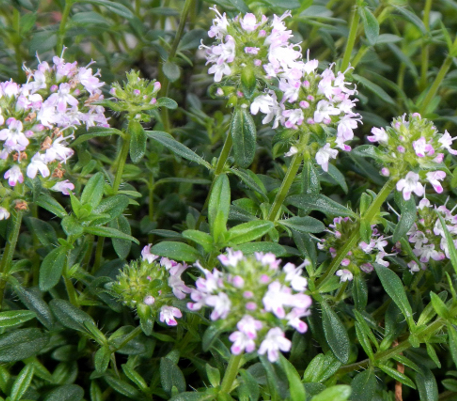
Common name: savory
Kingdom: Plantae
Clade: Angiosperms
Clade: Eudicots
Clade: Asterids
Order: Lamiales
Family: Lamiaceae
Genus: Satureja
Main species:
Satureja hortensis — summer savory (annual)
Satureja montana — winter savory (perennial)
Indicative nutritional values per 100 g (fresh leaves)
Energy: ≈ 50–70 kcal
Water: ≈ 70–75%
Carbohydrates: ≈ 8–12 g
of which sugars: 1–2 g
Protein: 3–6 g
Total fat: 1–2 g
SFA (saturated fatty acids; should be limited in the overall diet): traces
MUFA (monounsaturated fatty acids; generally favourable for lipid profile): traces
PUFA (polyunsaturated fatty acids; involved in cellular and anti-inflammatory functions): traces
Dietary fibre: 6–8 g
Vitamins: vitamin C, provitamin A (β-carotene), vitamin K, small amounts of B-group vitamins
Minerals: calcium, iron, magnesium, potassium
(Values are indicative and vary with species, growing conditions and freshness.)
Key constituents
Essential oil: rich in carvacrol, thymol, p-cymene, γ-terpinene, linalool, borneol and other terpenes.
Polyphenols: flavonoids (e.g. apigenin, luteolin, quercetin derivatives).
Tannins and other phenolic compounds with antioxidant activity.
Dietary fibre, especially in dried leaves.
Minor amounts of fat-soluble and water-soluble vitamins and minerals.
Production process
Cultivation
Sowing in spring for S. hortensis (annual) or transplanting young plants for S. montana (perennial).
Prefers light, well-drained soils with full sun exposure.
Moderate irrigation: the plant does not tolerate waterlogging and thrives in relatively dry conditions.
Harvest
Leaves and flowering tops are harvested at maximum aromaticity (typically summer, at flowering).
Manual cutting or light mechanical harvesting to avoid damaging stems and to allow regrowth (for perennial species).
Post-harvest
Cleaning and selection to remove foreign matter and damaged parts.
Drying in the shade with good ventilation or in low-temperature dryers to preserve essential oils.
Possible crushing/sieving and packaging as dried herb.
Other transformations
Steam distillation to obtain essential oil.
Preparation of herb blends (e.g. “Herbes de Provence”), seasoned salts, vinegars, oils and other flavouring products.
Physical properties
Small, narrow, dark green leaves.
Very intense and persistent aroma, especially when dried.
Dried product has very low water activity and good shelf stability.
Essential oil is highly volatile and concentrated, with strong fragrance.
Sensory and technological properties
Aroma: peppery, warm, thyme-like, slightly pungent with spicy and herbal notes.
Taste: aromatic, spicy, with a slightly bitter note if used in excess.
Withstands long cooking relatively well, unlike some more delicate herbs.
Dried leaves develop a stronger, more concentrated flavour than fresh leaves.
Traditionally used to improve digestibility of legumes and to soften sulphurous notes in some dishes.
Food applications
Flavouring for legumes (lentils, chickpeas, beans).
Seasoning for white meats, game, roasts and some fish dishes.
Ingredient in soups, stews, sauces, marinades, flavoured oils and vinegars.
Use in pickles and preserves (olives, vegetables in oil or vinegar).
Component of herb blends such as classic Provençal mixes.
Nutrition & health
Provides antioxidant compounds (carvacrol, thymol, flavonoids and other phenolics) that contribute to protection against oxidative stress within a balanced diet.
Traditionally considered digestive, carminative and mildly antiseptic, largely due to its essential oil composition (these uses are traditional and do not replace medical advice).
The essential oil shows antimicrobial and antioxidant activity in vitro; in foods it can contribute to flavour and, to a limited extent, shelf-life when used appropriately.
Very low caloric impact at typical culinary doses.
Fibre and polyphenols present in dried savory can support intestinal and metabolic health as part of a diversified, plant-rich diet.
Portion note
Typical culinary use:
1–2 g of dried leaves, or
5–10 g of fresh leaves per serving, depending on desired flavour intensity.
Allergens and intolerances
Savory does not belong to the list of major EU allergens.
Possible cross-reactions in individuals allergic to other Lamiaceae (e.g. thyme, oregano).
Essential oil may be irritant for skin and mucous membranes if used undiluted; in food it should always be well dispersed and used at very low levels.
Storage and shelf-life
Fresh herb
About 3–5 days in the refrigerator, in a breathable container or lightly wrapped to limit dehydration without trapping moisture.
Dried herb
Up to 12–18 months if stored in tightly closed containers, in a cool, dry place, away from light and heat.
Aroma gradually decreases over time, even if microbiologically stable.
Essential oil
Typically 1–2 years stability when stored in dark glass bottles, tightly closed, at stable, moderate temperature and away from light and oxygen sources.
Safety and regulatory aspects
As a culinary herb, savory must comply with EU rules on:
pesticide residues (MRL),
contaminants (e.g. heavy metals, mycotoxins),
hygiene in primary production and post-harvest handling.
Processing sites must operate under GMP and HACCP systems.
Essential oils used in food and cosmetics are subject to specific regulations, including purity criteria and safe-use limits for potentially irritant or sensitising components (carvacrol, thymol and others).
Labelling
For the herb marketed as a food ingredient
Name: “savory”, “summer savory” or “winter savory” with botanical name (Satureja hortensis / Satureja montana).
Country of origin.
Net quantity, lot number and best-before date (especially for dried products).
Storage instructions (e.g. “store in a cool, dry place”).
For blends and essential oils
Full list of ingredients.
Net quantity and, for essential oils, intended use and safety warnings where legally required.
Troubleshooting
Weak aroma → over-drying, too old stock or poor storage (exposure to light/heat or open containers).
Dark or heavily broken leaves → low raw-material quality or advanced oxidative degradation.
Presence of moisture or clumping → risk of mould growth in dried herb; may require re-drying or, if mould is visible, disposal.
Excessively pungent or bitter flavour in the dish → dosage too high; savory has a strong taste and should be used sparingly.
Sustainability and supply chain
Savory can be grown with low-input techniques: modest water requirements, good tolerance of poor, dry soils.
Well suited to local, small-scale and organic cultivation, supporting short supply chains and reduced transport impact.
Plant residues are fully compostable.
For dried products, recyclable packaging such as glass jars or paperboard with minimal plastic can improve environmental performance.
Main INCI functions (cosmetics)
Extracts and essential oils from Satureja hortensis or S. montana can be used in cosmetics as:
Antimicrobial agents (thanks to carvacrol and thymol).
Antioxidant components supporting formula stability and skin protection.
Purifying and deodorant agents in deodorants, cleansing products and foot care.
Toning and “revitalising” fragrance components in aromatherapeutic or spa-type products.
Fragrance ingredients contributing a warm, herbal, spicy note.
Use levels must respect safety guidelines for fragrance allergens and potential irritants.
Conclusion
Savory is a powerful, characterful herb with a complex sensory profile and a long history in Mediterranean gastronomy. Its intense aroma allows effective use at very low doses, especially in legume dishes, meats, sauces and preserves. At the same time, its essential oils and polyphenols offer interesting antioxidant and antimicrobial properties relevant to both food and cosmetic applications. Agronomically robust and adaptable to low-input cultivation, savory fits well into sustainable, short supply chains when supported by careful handling, drying and storage practices to preserve quality and safety.
Mini-glossary
SFA – Saturated fatty acids; fats that should be moderated due to their association with increased cardiovascular risk.
MUFA – Monounsaturated fatty acids; generally beneficial for blood lipid profile.
PUFA – Polyunsaturated fatty acids; important for cell membranes and anti-inflammatory processes.
MRL – Maximum Residue Level; legal limit for pesticide residues in foods.
GMP – Good Manufacturing Practices; rules ensuring correct, hygienic production.
HACCP – Hazard Analysis and Critical Control Points; preventive system for managing food-safety hazards.
Studies
Savory has been used in the medical sector for a long time because of the antibacterial properties of its essential oil.
In fact, positive effects have been established specifically against oral stomatitis due to the use of prostheses (1) for which a topical application of the oil is recommended, but also positive effects against the growth of periodontal bacteria (2).
It has been shown to be effective against aflatoxins (3). For the record, the fungus that feeds them, Aspergillus parasiticum has seriously affected Italian and European maize in 2012, so much so that the Ministry of Health issued a circular of 14/09/2012 with which the competent bodies were warned of the danger to human health.

