



Mistletoe (Viscum album)
Description
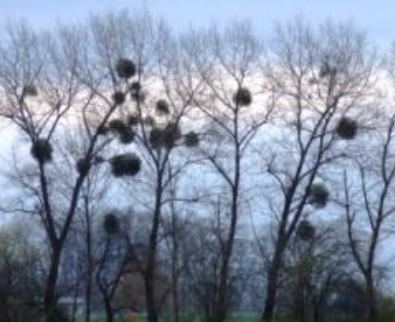
Viscum album, commonly known as European mistletoe, is an evergreen hemiparasitic plant belonging to the family Santalaceae. It lives anchored to the branches of host trees (broadleaf and conifer species), from which it absorbs water and part of its nutrients through specialized structures called haustoria. It can colonize species such as poplar, oak, linden, apple, pine, and fir.
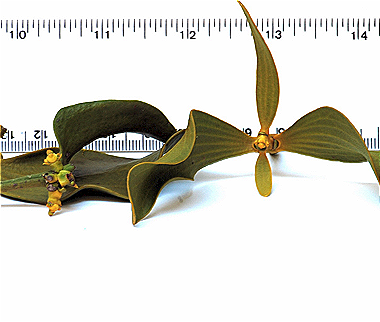
Its morphology is distinctive: globular, bushy clumps, articulated and bifurcated branches, opposite elliptic leaves that are leathery and persistent, and white, translucent berries rich in mucopolysaccharides that ripen between autumn and winter. The berries contain sticky seeds, dispersed mainly by birds that feed on them and thus contribute to natural spread.
For centuries, mistletoe has held a strong symbolic and ritual value in European cultures: a symbol of peace, rebirth, protection, and good fortune. However, from a direct food perspective it is not considered a common edible plant, as several fractions contain bioactive and potentially toxic substances that must be handled with care.
 |  |
Botanical classification
Common name: mistletoe
Clade: Angiosperms
Order: Santalales
Family: Santalaceae
Genus: Viscum
Species: Viscum album L.
Cultivation and growth conditions
Climate
Mistletoe is typical of temperate regions, with cold winters and fairly regular rainfall. It grows naturally across Europe and parts of Asia and tolerates frost and even severe cold. It is hemiparasitic, obtaining water and minerals from the host tree, so climatic balance and water availability influence both the host and the mistletoe.
Exposure
The plant prefers full light or sunny to partially sunny positions, ensuring efficient photosynthesis in its evergreen leaves. In deep shade, growth slows and berry formation decreases. Open, luminous conditions—such as isolated trees or woodland edges—promote better development.
Soil
Mistletoe does not root in the soil, anchoring itself through specialized haustoria that penetrate branches. Soil characteristics therefore concern the host: fresh, moderately fertile and moist soils promote its vigor, indirectly supporting mistletoe growth. Very poor or overly chalky soils may weaken the host, limiting mistletoe development.
Irrigation
No direct irrigation is needed since water is absorbed from the vascular system of the branch. However, regions with regular rainfall and adequate humidity benefit both the host and the mistletoe. Extended drought may stress the host, reducing shoot production and mistletoe vigor.
Temperature
Optimal temperatures range from about 8–22 °C. The plant is highly frost-resistant and tolerates harsh winters. Very hot and dry conditions may slow photosynthesis and growth.
Fertilization
Mistletoe requires no specific fertilization. Nutrients are taken from the host through the haustorial connection. Improving the organic matter and mineral balance of the soil can, indirectly, support the host’s health. Excessive fertilization is not necessary.
Crop care
Cultivation is essentially the management of its spread. On fruit trees and ornamentals, excess growth may weaken branches by competing for water and nutrients. The most common actions are pruning and selective removal of infested branches. In ornamental or ecological contexts, mistletoe may be left, provided the balance between host vitality and mistletoe density is maintained.
Harvesting
Harvesting is carried out in winter, when white berries are ripe. Sprigs are cut manually, avoiding excessive damage to the host. Once collected, branches are cleaned and used for traditional or decorative purposes. In nature, birds disperse seeds while feeding on the berries.
Propagation
Propagation occurs by seed. The berry pulp is sticky and helps seeds adhere to bark. Under controlled conditions, seeds are manually applied to small bark incisions in well-lit areas. Germination is slow: the young plant develops haustoria that connect to host tissues. Full berry production usually requires a few years.
Indicative nutritional values per 100 g
(dried plant – approximate values, variable according to host tree and origin)
Energy: ~ 250–300 kcal
Water: ~ 5–10 g
Total carbohydrates: ~ 40–50 g
Dietary fibre: present in significant amount
Protein: ~ 15–20 g
Total fat: ~ 3–5 g
First occurrence SFA (Saturated Fatty Acids): present in small amounts – excessive intake may contribute to higher LDL cholesterol
MUFA (MonoUnsaturated Fatty Acids): minor fraction, potentially neutral or slightly favourable to lipid profile
PUFA (PolyUnsaturated Fatty Acids): prevalent in the lipid fraction, generally associated with more favourable cardiovascular profiles
Minerals: potassium, calcium, magnesium, iron, zinc, manganese
Vitamins: traces of B-group compounds and minor antioxidants
Note: direct food use is not recommended for berries or crude, unprocessed plant material due to the presence of lectins and viscotoxins.
Key constituents
Lectins (mistletoe lectins)
Viscotoxins (bioactive polypeptides)
Flavonoids: quercetin, rutin, and derivatives
Complex polysaccharides
Triterpenes: oleanolic acid, betulinic acid
Phytosterols
Essential oil traces
Minerals: calcium, magnesium, iron, zinc, potassium
Structural dietary fibre
Production process
(for dry extracts, powders, or functional ingredients)
Harvesting of leaves and twigs
Manual collection in winter, when the plant is relatively richer in active compounds
Selection of healthy, uncontaminated aerial parts
Preliminary cleaning
Removal of berries (which contain higher levels of potentially toxic compounds)
Discarding damaged or mouldy fractions
Controlled drying
Indirect warm air or low-temperature dryers to preserve phytochemicals
Moisture reduction to ensure microbiological stability
Cutting and milling
Preparation of powdered material or fine cuts suited for extraction
Extraction (where applicable)
Aqueous or hydroalcoholic methods
Concentration and purification to obtain standardized extracts
Storage and packaging
Protection from moisture, light, and heat
Microbiological control and declaration of active compound titration
Physical properties
Globular, bushy growth on the host tree
Leathery leaves, uniform olive-green colour
Spherical, white berries with a sticky consistency due to high polysaccharide content
Fibrous, resistant internal structure
Dried plant material: light, friable, and hygroscopic
Sensory and technological properties
Mild, herbaceous, slightly balsamic aroma
Resinous, woodland-like notes
Gentle vegetable bitterness in leaves, more intense in concentrated extracts
Good solubility for fluid extracts
In dried form, may be incorporated in herbal blends or infusions (in controlled amounts and only when raw materials are approved for such use)
Food applications
(very limited and subject to specific rules)
Herbal teas and mixtures containing selected, controlled plant parts
Functional ingredients in small amounts in complex plant-based formulations
Historical local traditions using thermally treated leaves
Current uses: mainly herbal extracts and supplements, NOT fresh berries and NOT home-prepared raw material for food
Important note: berries and crude extracts must not be consumed as household food.
Nutrition and health
Use of mistletoe in the health field is centred on controlled extracts, not on direct food consumption. Its bioactive substances (lectins, flavonoids, polysaccharides, triterpenes) are the subject of research in phytotherapy and complementary applications.
Key nutritional and physiological points
phytochemical component rich in polyphenols and polysaccharides
structural fibre with potential effects on digestion and intestinal transit
mineral content contributing to cellular and enzymatic functions
Warnings
presence of lectins and viscotoxins requires specific extraction, titration, and safety evaluation
NOT a common food ingredient
applications are mainly herbal and complementary, not culinary
Portion note
There is no standard “food portion” because mistletoe is not used as a direct food.
In phytopreparations, any dosage must be defined by qualified professionals and according to the applicable regulatory framework.
Allergens and intolerances
not classified as a primary food allergen
possible individual sensitivity to protein compounds (lectins)
berries may have irritant/toxic effects
crude, home-prepared material can pose toxicity risks
Storage and shelf-life
Store at room temperature, protected from moisture and light
Dry extracts: shelf-life typically between 12–36 months, depending on the formulation
Avoid containers permeable to water vapour
Close tightly after use to limit oxidation and degradation of phytochemicals
Safety and regulatory aspects
NOT considered a common food ingredient
Regulated use in herbal products and food supplements
Compliance required for: purity, microbiological limits, titration, labelling, notifications where applicable
Berries can contain potentially toxic actives: home use as food is strongly discouraged
Labelling
For approved products (teas, extracts, supplements):
Name: “Mistletoe” or “Viscum album”
Indication of parts used (leaves/twigs, standardized extract)
Country of origin
Batch and date
Directions for use and warnings
Indication of titration/standardization of active components
Troubleshooting
In herbal use
overly bitter, harsh taste → reduce concentration or infusion time, or combine with milder herbs
strong loss of aroma → possible excessive exposure to heat or light during storage or processing
precipitation in solutions → filtration or carefully adjusted hydroalcoholic ratio
In storage
earthy, musty odour → likely excessive humidity or poor drying
marked discolouration → photodegradation of phenolic compounds
Sustainability and supply chain
Viscum album grows spontaneously on host trees and does not require intensive cultivation. Key aspects include:
respectful harvesting that follows the plant’s seasonal cycle
maintaining host tree vitality (partial, controlled removal of clumps)
traceability of origin and harvesting area
monitoring of environmental contaminants in collection zones
Main INCI functions (cosmetics)
In cosmetics, Viscum album Extract is used primarily as:
skin conditioning agent (improved softness and skin comfort)
mild skin toning component
functional fraction in botanical, plant-based, or “natural concept” formulations
Cosmetic use is more common than direct nutritional use.
Conclusion
Viscum album is an evergreen plant with a strong historical, symbolic, and cultural relevance. From a technical point of view, it represents a vegetal matrix rich in bioactive compounds, fibre, polyphenols, minerals, and distinctive protein fractions.
Despite a potentially interesting nutrient profile on paper, it is not used as a direct food because of the presence of lectins and viscotoxins, which require specific processing and strict safety control. Its modern role is therefore mainly linked to herbal extracts and cosmetics, where it is valued for its functional components and botanical identity.
When used correctly, according to safety and standardization criteria, mistletoe remains a peculiar botanical resource, a bridge between ancient traditions and modern technical applications.
Mini-glossary
Lectins: carbohydrate-binding proteins with specific biological actions, potentially toxic at high doses.
Viscotoxins: short polypeptides characteristic of mistletoe, with marked bioactivity and toxicity risks if misused.
Skin conditioning: cosmetic function related to improved skin feel, softness, and comfort.
SFA: Saturated Fatty Acids – fats that tend to raise LDL cholesterol when consumed in excess.
MUFA: MonoUnsaturated Fatty Acids – fats generally considered neutral or beneficial for cardiovascular health.
PUFA: PolyUnsaturated Fatty Acids – fats frequently associated with more favourable blood lipid profiles and cardiovascular protection.
Studies
Mistletoe: its antioxidant components include viscotoxins, small proteins capable of counteracting cancer cells, oligosaccharides, polysaccharides, triterpene acids, phenylpropanoids, alkaloids and flavonoid.
Chemical analysis performed with high resolution chromatography equipped with high resolution mass spectrometer has identified the following main components: caffeic acid, chlorogenic acid, sakuranetin, isosakuranetin, syringenin 4-O-glucoside, syringenin 4-O-apiosyl-glucoside, alangilignoside C and ligalbumoside A (1).
Mistletoe extracts have been used as adjuvants in cancer therapy for decades. The main component of the mistletoe is a protein called Mistletoe lectin 1, which stimulates the immune system and influences the proliferation and motility of cancer cells (1).
This study shows the first evidence that an extract of mistletoe leaves produced interesting cardioprotective effect in rats (3).

