



Primrose (Primula spp.)
Botanical And Morphological Description
Primroses form a large genus of herbaceous perennials in the family Primulaceae. They typically grow as compact basal rosettes, with plants usually ranging from about 5 to 30 cm in height depending on the species and cultivar. The leaves are oblong to spatulate, with a slightly crenate or dentate margin and a surface that is often somewhat wrinkled; the colour is light to medium green, sometimes darker in montane or woodland forms.
Inflorescences differ among species: Primula vulgaris generally bears solitary flowers on short stalks emerging from the rosette, whereas Primula veris and Primula elatior often carry umbels of flowers on more elongated, erect peduncles. The corolla is tubular at the base and expands into five lobes, with a very wide colour range (yellow, white, pink, red, purple, bicolour), frequently with a more intense “eye” at the centre.
The fruit is a dehiscent capsule containing many tiny seeds. The vegetative cycle is typically early-season; many species flower from late winter to early spring, which explains the common name referring to one of the first flowers to appear in the year.
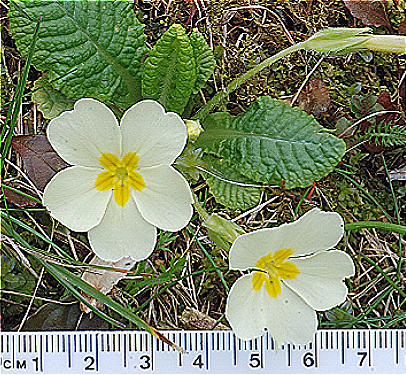 | 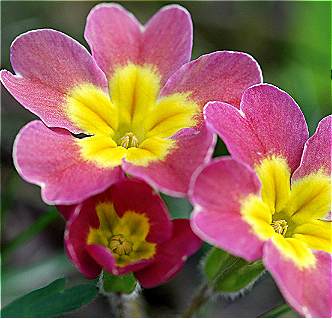 |
Distribution, Ecology And Cultivation Aspects
Primula species are mainly distributed in the temperate regions of the Northern Hemisphere, with centres of diversity in Eurasia, especially in mountainous and cool–moist areas. They typically occur in woodland margins, damp meadows, shaded riverbanks, hedgerows and other habitats where soils remain relatively cool and moist.
From an ecological and agronomic standpoint, primroses prefer light to partial shade: strong, prolonged direct sunlight tends to shorten the flowering period and stress the foliage. They require well-drained, humus-rich soils, often slightly acidic to neutral, with constant but not excessive moisture; prolonged waterlogging promotes root and crown rots. Many hardy species tolerate low winter temperatures and resume active growth with the rise in spring temperatures, whereas extended summer drought and heat can be limiting.
In cultivation, good performance is tied to regular but moderate watering, light fertilisation and basic hygiene practices such as removal of senescent leaves and spent flowers. Propagation is carried out from seed or by division of mature clumps. The abundance and duration of flowering are influenced by species and cultivar, late-winter and spring weather, soil moisture availability and correct positioning in the garden or production facility.
Phytochemical Profile And Functional Features
The phytochemical profile of Primula varies among species and plant organs. Roots of medicinal species such as Primula veris and Primula elatior contain triterpene saponins and salicylate-type glycosides, which are associated with secretolytic and expectorant properties and contribute to the characteristic odour of dried root material.
Flowers and aerial parts are relatively richer in phenolic compounds, including flavonoids, phenolic acids and related derivatives, and in some species anthocyanins that determine the corolla colour. Carotenoids contribute to yellow and orange pigmentation and to overall antioxidant potential. The relative levels of these constituents depend on species, ecotype, habitat, stage of development and conditions during harvesting, drying and storage.
Food, Traditional And Processing Uses
In several European traditions, particularly for Primula veris, young flowers and sometimes leaves have been used in small quantities as flavouring or decorative components in spring dishes and beverages, including infusions and fermented drinks. Direct food use is today limited and generally regional, while the main relevance lies in herbal practice: roots and aerial parts are employed in herbal teas, decoctions, and standardised extracts incorporated into expectorant and respiratory formulations, always under the applicable regulatory and safety frameworks.
Primroses are of major importance in the ornamental sector. Numerous wild species, hybrids (for example Primula × polyantha) and horticultural groups are produced industrially as pot plants or bedding plants, with a broad assortment of colours and forms selected to meet market requirements for early-season flowering ornamentals.
Qualitative Assessment And Commercial Requirements
Ornamental Sector
For Primula plants commercialised as ornamentals, quality assessment typically considers:
Plant morphology: compact, well-formed rosette; balanced growth and uniformity within the batch.
Flowering characteristics: number of flowers per plant, regularity and stability of colour, integrity of the corolla and absence of malformations.
Foliage condition: fresh, intense green colour without chlorosis, necrotic spots or mechanical damage.
Sanitary status: absence of visible pests (such as aphids or thrips) and diseases (powdery mildew, root and crown rots).
Post-purchase performance: ability to maintain turgor and flowering for a satisfactory period under typical indoor or garden conditions.
Herbal Raw Material And Extracts
For herbal materials and extracts obtained from Primula veris, P. elatior or related medicinal taxa, the main quality criteria include:
Botanical identity and purity: correct species identification and absence of other plant material.
Content of marker constituents: appropriate and standardised levels of triterpene saponins and, where relevant, salicylate-type glycosides, in line with pharmacopoeial or regulatory specifications.
Physico-chemical properties: adequate degree of drying, controlled residual moisture, typical colour and odour, and stability during storage.
Microbiological quality: compliance with the limits set for herbal teas, dry extracts and similar preparations.
Harvesting, drying and storage conditions are critical to preserving the integrity of active constituents and ensuring consistent functional and sensory properties in the final product, whether destined for ornamental use or for herbal preparations.
Botanical classification (APG IV system)
Common name: Primrose
Botanical name: Primula spp.
Kingdom: Plantae
Clade: Angiosperms → Eudicots → Asterids
Order: Ericales
Family: Primulaceae
Genus: Primula
Species: Numerous species (e.g. Primula vulgaris, Primula veris, Primula elatior)
Indicative nutritional values per 100 g (fresh edible leaves*)
| Component | Approx. value per 100 g |
|---|---|
| Energy | ~ 25–35 kcal |
| Total carbohydrates | ~ 4–6 g |
| — of which sugars | ~ 1–2 g |
| Dietary fibre | ~ 2–3 g |
| Proteins | ~ 1–2 g |
| Total fats | ~ 0.3–0.5 g |
| — of which saturated fatty acids (SFA) | trace |
| Sodium | very low |
| Potassium | ~ 200–300 mg |
| Calcium | ~ 50–70 mg |
| Magnesium | ~ 20–30 mg |
| Phosphorus | ~ 30–40 mg |
| Iron | ~ 0.5–1 mg |
| Vitamin C | ~ 30–50 mg |
| Vitamin A (as β-carotene) | present |
| B-group vitamins | present in small amounts |
* There are no specific standard nutrient tables for primrose. Values are indicative, extrapolated from similar tender leafy edible herbs; real composition may vary with species, habitat and growth stage.
Plant Characteristics
Primula veris is a low-growing perennial plant with the following features:
- Height: Typically grows to a height of 10–30 cm.
- Leaves: Forms a rosette of wrinkled, oblong leaves with a slightly toothed margin. The leaves are light green and soft to the touch.
- Flowers: Produces clusters of bright yellow, nodding flowers with an orange spot at the base of each petal. The flowers are carried on a single stem that rises above the foliage.
- Roots: Thick, fibrous roots are used in traditional medicine.
- Growth Habitat: Thrives in grasslands, meadows, and open woodlands, preferring well-drained soils.
Chemical Composition and Structure
Primula veris contains several bioactive compounds that contribute to its medicinal properties:
- Saponins: Active compounds with expectorant and anti-inflammatory properties, particularly useful for respiratory conditions.
- Phenolic Acids: Such as rosmarinic acid, which exhibit antioxidant effects.
- Flavonoids: Including quercetin and kaempferol, which have anti-inflammatory and antimicrobial properties.
- Tannins: Contributing to the astringent properties of the plant.
- Vitamins: Rich in vitamin C, supporting immune health.
How to Cultivate Primula veris
Cultivating Primula veris is relatively easy in suitable environments:
- Climate: Prefers temperate climates with cool winters and moderate summers.
- Soil Requirements: Grows best in well-drained, fertile soils with a neutral to slightly acidic pH.
- Sunlight: Thrives in partial shade but can tolerate full sun in cooler climates.
- Watering: Requires consistent moisture but does not tolerate waterlogging. Mulching helps retain soil moisture.
- Propagation: Can be propagated by seeds, division, or root cuttings. Seeds are sown in autumn or spring, and mature plants can be divided in early spring or autumn.
- Maintenance: Minimal maintenance is required. Deadheading encourages prolonged blooming.
Uses and Benefits
Primula veris has a variety of uses, ranging from medicinal to ornamental:
Medicinal Uses:
- Respiratory Health: Saponins in the roots and flowers act as natural expectorants, helping to relieve coughs, bronchitis, and colds.
- Calming Effects: Traditionally used as a mild sedative to alleviate anxiety, insomnia, and nervousness.
- Anti-inflammatory: The plant's compounds are beneficial in reducing inflammation in the body.
- Digestive Aid: Historically used to treat mild digestive disorders, including bloating and indigestion.
Ornamental:
- Popular in gardens for its vibrant yellow flowers that herald spring.
- Often planted in rock gardens, borders, and wildflower meadows.
Culinary Uses:
- Flowers are sometimes used as a garnish or in salads.
- Young leaves can be cooked as greens or added to soups.
Applications
Medical:
- Commonly prepared as herbal teas, tinctures, or infusions for treating respiratory and nervous system ailments.
- Extracts from the plant are used in natural remedies and over-the-counter preparations for cough relief.
Cosmetic:
- Used in skincare products for its soothing and anti-inflammatory properties.
- Infusions of the flowers are sometimes used as a natural toner for sensitive skin.
Ornamental:
- Planted for its vibrant spring blooms, providing a splash of color to gardens and landscapes.
Environmental and Safety Considerations
Primula veris is a low-maintenance and environmentally friendly plant. However:
- Environmental Benefits: Contributes to biodiversity, attracting pollinators such as bees and butterflies. It is often included in wildflower seed mixes to enhance natural habitats.
- Safety: Generally safe for consumption and topical use, but individuals with allergies to plants in the Primulaceae family should exercise caution. Excessive consumption may cause mild gastrointestinal discomfort.
- Conservation: In some regions, Primula veris is protected due to habitat loss. Sustainable cultivation and planting in gardens can help preserve this species.
Many species of primroses, about 400, including :
- Primula auriculata
- Primula tibetica
- Primula undulifolia sp.nov. recently discovered in China
- Primula carolinella Hemsl with 12 subspecies
- Primula sinensis Sabine ex Lindley
- Primula poissonii
Studies
Medical
Primrose is an important medicinal plant with documented use for the treatment of gout, headaches, and migraines dating back to the Middle Ages. Triterpene saponins from roots and flowers are used in phytotherapeutic treatments against bronchitis and colds for their expectorant and secretolytic effects. Two flavonoids, six flavonoid glycosides, four new denatured flavonoid glycosides, five anthocyanins and three triterpene saponins have been identified in alcoholic extracts of petals, leaves and roots (1).
Traditional Medicine: Primula veris has been used in traditional European medicine (2) for various ailments, such as coughs, respiratory issues, and sleep disturbances.
Cosmetic Products: Due to its potential soothing and antioxidant properties, it can be found in lotions, creams, and other skincare products.
Herbal Teas: The leaves and flowers of primrose can be used to prepare herbal teas.
Properties
- Soothing: primrose is believed to have soothing properties that can help calm irritated skin.
- Antioxidant: It may contain antioxidants that help shield the skin from free radical damage.
- Expectorant: In traditional medicine, it's used as an expectorant to aid in coughs and respiratory conditions.

