



Sesame (Sesamum indicum L.)
Description
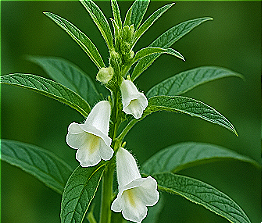
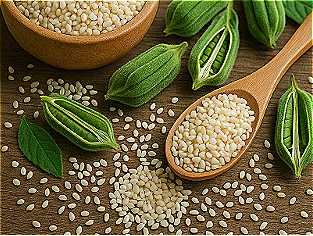
Sesame is an annual herbaceous species of the Pedaliaceae family, cultivated for millennia in regions with tropical, subtropical and warm temperate climates. The plant has an erect stem, simple or branched, with opposite or alternate leaves of variable shape (ovate, lanceolate or lobed) and inflorescences bearing tubular flowers, usually white or pinkish. The fruit is an elongated capsule, internally divided into compartments that contain the small seeds, which represent the main part of interest from a food and technological standpoint.
From a cultivation perspective, sesame prefers high temperatures, good light availability and well-drained soils, from light to sandy-loam textures, including moderately calcareous substrates. It is considered a relatively hardy crop, with a fair degree of drought tolerance, while it is sensitive to waterlogging and prolonged low temperatures. The duration of the crop cycle and the yield levels depend on cultivar, water availability, soil fertility and the climatic conditions of the growing season.
The sesame seeds are the most relevant component in terms of composition. They contain a significant proportion of lipids, mainly unsaturated fatty acids, in particular oleic and linoleic acid, together with a fraction of proteins, dietary fibre, phenolic compounds and antioxidant substances such as sesamin and sesamolin. Minerals including calcium, phosphorus, potassium and iron are also present. The exact composition of the seeds varies according to variety, growing region and agronomic practices.
From a food and processing standpoint, sesame seeds are used whole, toasted or hulled, both as an ingredient and as a garnish in numerous bakery products, sweet and savoury preparations. Sesame oil, obtained by pressing the seeds, is characterised by a specific aromatic profile and a lipid fraction with a high proportion of unsaturated fatty acids; it is used in the food sector and, to a lesser extent, in technical formulations. Sesame is also processed into pastes and spreads derived from ground seeds, employed in confectionery and culinary products.
The quality assessment of sesame seeds intended for industrial use considers seed size, uniformity, colour, oil content, absence of defects and lot purity. Proper management of harvesting, cleaning, drying and storage is essential to maintain the quality, oxidative stability and technological properties of the final product.
 |  |
Botanical classification (APG IV system)
Common name: Sesame
Botanical name: Sesamum indicum L.
Kingdom: Plantae
Clade: Angiosperms → Eudicots → Asterids
Order: Lamiales
Family: Pedaliaceae
Genus: Sesamum
Species: Sesamum indicum L.
Indicative nutritional values per 100 g (sesame seeds)
| Component | Approx. value per 100 g |
|---|---|
| Energy | ~ 560–580 kcal |
| Total carbohydrates | ~ 23–26 g |
| — of which sugars | ~ 0.3–1 g |
| Dietary fibre | ~ 11–12 g |
| Proteins | ~ 17–19 g |
| Total fats | ~ 48–50 g |
| — of which saturated fatty acids (SFA) | ~ 6–7 g |
| — monounsaturated (MUFA) | ~ 18–20 g |
| — polyunsaturated (PUFA) | ~ 21–23 g |
| Calcium | ~ 950–1000 mg |
| Magnesium | ~ 330–350 mg |
| Phosphorus | ~ 600–630 mg |
| Iron | ~ 14–16 mg |
| Potassium | ~ 450–470 mg |
| Sodium | very low |
| Vitamin B1 (thiamine) | present |
| Vitamin B6 | present |
| Folates | present |
| Vitamin E | moderate amounts |
Values may vary depending on cultivar, origin, seed quality and roasting.
Sesame seeds are notable for their high lipid content (mainly unsaturated) and remarkable mineral density, especially calcium, phosphorus, iron and magnesium.
Mini-glossary of acronyms
SFA = Saturated fatty acids. When they outweigh unsaturated fats in the diet, they are generally considered less favourable for cardiovascular balance.
MUFA = Monounsaturated fatty acids. Commonly regarded as more suitable than saturated fats.
PUFA = Polyunsaturated fatty acids. Include omega-6 and omega-3, essential in small amounts and involved in inflammatory balance and cellular membrane structure.
Plant characteristics
Habit: Annual herbaceous plant, 60–120 cm tall, with an erect, slightly branched, finely hairy stem.
Leaves: Opposite or alternate, entire or lobed, variable in shape (ovate, lanceolate, or trilobed), dark green.
Flowers: Large, tubular, white, pink, or violet, solitary or paired; mainly insect-pollinated.
Fruits: Elongated capsules that split open at maturity, releasing numerous small flat seeds.
Seeds: Oval, 2–3 mm long, white, yellow, brown, or black; oily, sweet, and aromatic.
Roots: Taprooted and branched, well suited to light, well-drained soils.
Chemical composition (main constituents of seeds and oil)
Oil (45–55%): rich in unsaturated fatty acids — mainly oleic acid (MUFA, monounsaturated, beneficial for cardiovascular health) and linoleic acid (PUFA, polyunsaturated omega-6, supporting skin and immune function).
Proteins: 18–25%, with a good balance of essential amino acids (methionine, lysine).
Carbohydrates and fibers: 10–15%, promoting digestion and intestinal regularity.
Lignans: sesamin, sesamolin, and sesamol, with antioxidant and hepatoprotective properties.
Phytosterols: reduce intestinal cholesterol absorption.
Minerals: calcium, iron, magnesium, zinc, phosphorus.
Vitamins: E (tocopherols, natural antioxidants), B1 (thiamine), and B6 (pyridoxine).
Cultivation and growing conditions
Climate: Warm, tropical to subtropical; sensitive to frost and cold.
Exposure: Full sun; essential for optimal oil yield.
Soil: Light, sandy or loamy, well-drained, pH 5.5–8; drought-tolerant but sensitive to waterlogging.
Irrigation: Moderate; excessive watering reduces seed quality.
Sowing: Springtime, when temperatures exceed 20 °C; germination within 7–10 days.
Harvesting: 90–120 days after sowing, when capsules begin to split.
Yield: 400–800 kg of seeds per hectare, depending on conditions.
Uses and benefits (traditional and supported by preliminary scientific evidence)
Nutritional and restorative: Provides energy, high-quality proteins, and beneficial fats.
Antioxidant and anti-inflammatory: Lignans (sesamin, sesamolin) protect cells from oxidative stress.
Cardioprotective: Sesame oil, rich in MUFA and PUFA, helps maintain healthy cholesterol levels and heart function.
Digestive and mild laxative: Traditionally used to soothe mucous membranes and improve digestion.
Antibacterial and dermoprotective: Sesame oil is valued in cosmetics for moisturizing, soothing, and protecting the skin.
Scientific studies confirm sesame’s role as a functional food rich in antioxidants and healthy lipids, though benefits depend on regular, moderate consumption.
Applications
Food: Whole or toasted seeds in bread, pastries, sauces (tahini), energy bars, and as garnish; oil for cooking and dressings.
Herbal and nutraceutical: Sesame oil and extracts used to support cardiovascular and skin health.
Cosmetics: Base oil in creams, soaps, massage oils, and nourishing products for hair and skin.
Industrial: Used in paints, lubricants, and vegetable-based soaps.
Animal feed: Sesame meal as a protein-rich supplement.
Harvesting and processing
Harvesting: Manual or mechanical, when capsules begin to dehisce (open).
Drying: Under the sun or in ventilated spaces until completely dry.
Threshing: Seeds separated from pods by beating or mechanical threshing.
Oil extraction: Cold pressing or solvent-free mechanical extraction; followed by filtration and refining.
Storage: Seeds and oil stored in airtight containers, away from light and moisture.
Environmental considerations
Sesame is a low-impact crop adapted to poor and dry soils. It requires little water and supports sustainable crop rotation systems. Promoting traditional varieties helps preserve biodiversity and prevent genetic erosion, making sesame cultivation an environmentally friendly option for semi-arid regions.
Safety, contraindications, interactions
Generally regarded as safe and well tolerated.
Allergies: Rare but possible; sesame is a recognized allergen in sensitive individuals.
Excess consumption: May contribute to caloric excess due to high fat content.
Interactions: Mild interaction possible with hypoglycemic or anticoagulant medications (due to lignans).
Pregnancy and lactation: Moderate consumption considered safe.
Common preparations (general, non-therapeutic use)
Toasted seeds: Added to salads, bread, soups, and desserts.
Tahini: Paste made from toasted and ground sesame seeds, base ingredient of hummus.
Sesame oil: Used for cooking, salad dressings, or as massage oil.
Seed infusion: Traditionally used as a mild digestive aid.
Studies
In this study sesame oil shows anti-inflammatory and antioxidant effects with promising results in lowering high levels of cholesterol and inflammation, reducing the risk of atherosclerosis and delaying the onset of cardiovascular disease (1).
Allergies to this type of seed have increased in the last 10 years, especially in Canada, Israel and Japan.
Sesame studies
References_____________________________________________________________________
(1) Hsu E, Parthasarathy S. Cureus. Anti-inflammatory and Antioxidant Effects of Sesame Oil on Atherosclerosis: A Descriptive Literature Review. 2017 Jul 6;9(7):e1438. doi: 10.7759/cureus.1438. Review.
Abstract. Sesame oil (SO) is a supplement that has been known to have anti-inflammatory and antioxidant properties, which makes it effective for reducing atherosclerosis and the risk of cardiovascular disease. Due to the side effects of statins, the current recommended treatment for atherosclerosis and cardiovascular diseases, the idea of using dietary and nutritional supplementation has been explored. The benefits of a dietary health regime have piqued curiosity because many different cultures have reaped health benefits through the ingredients in their cooking with negligible side effects. The purpose of this literary review is to provide a broad overview of the potential benefits and risks of SO on the development of atherosclerosis and its direction toward human clinical use. Current in vivo and in vitro research has shed light on the effects of SO and its research has shown that SO can decrease low-density lipoprotein (LDL) levels while maintaining high-density lipoprotein (HDL) levels. Current limitations in recent studies include no standardized doses of SO given to subjects and unknown specific mechanisms of the different components of SO. Future studies should explore possible synergistic and adverse effects of SO when combined with current recommended pharmaceutical therapies and other adjunct treatments.
Wei P, Zhao F, Wang Z, Wang Q, Chai X, Hou G, Meng Q. Sesame (Sesamum indicum L.): A Comprehensive Review of Nutritional Value, Phytochemical Composition, Health Benefits, Development of Food, and Industrial Applications. Nutrients. 2022 Sep 30;14(19):4079. doi: 10.3390/nu14194079.
Abstract. Sesame (Sesamum indicum L.), of the Pedaliaceae family, is one of the first oil crops used in humans. It is widely grown and has a mellow flavor and high nutritional value, making it very popular in the diet. Sesame seeds are rich in protein and lipids and have many health benefits. A number of in vitro and in vivo studies and clinical trials have found sesame seeds to be rich in lignan-like active ingredients. They have antioxidant, cholesterol reduction, blood lipid regulation, liver and kidney protection, cardiovascular system protection, anti-inflammatory, anti-tumor, and other effects, which have great benefits to human health. In addition, the aqueous extract of sesame has been shown to be safe for animals. As an important medicinal and edible homologous food, sesame is used in various aspects of daily life such as food, feed, and cosmetics. The health food applications of sesame are increasing. This paper reviews the progress of research on the nutritional value, chemical composition, pharmacological effects, and processing uses of sesame to support the further development of more functionalities of sesame.
Villa C, Costa J, Mafra I. Sesame as a source of food allergens: clinical relevance, molecular characterization, cross-reactivity, stability toward processing and detection strategies. Crit Rev Food Sci Nutr. 2024;64(14):4746-4762. doi: 10.1080/10408398.2022.2145263.
Abstract. Sesame is an allergenic food with an increasing allergy prevalence among the European/USA population. Sesame allergy is generally life-persisting, being the cause of severe/systemic adverse immune responses in sesame-allergic individuals. Herein, clinical data about sesame allergy, including prevalence, diagnosis, relevance, and treatments are described, with focus on the molecular characterization of sesame allergens, their cross-reactivity and co-sensitization phenomena. The influence of food processing and digestibility on the stability/immunoreactivity of sesame allergens is critically discussed and the analytical approaches available for their detection in foodstuffs. Cross-reactivity between sesame and tree nuts or peanuts is frequent because of the high similarities among proteins of the same family. However, cross-reactivity phenomena are not always correlated with true clinical allergy in sensitized patients. Data suggest that sesame allergens are resistant to heat treatments and digestibility, with little effect on their immunoreactivity. Nevertheless, data are scarce, evidencing the need for more research to understand the effect of food processing on sesame allergenicity modulation. The demands for identifying trace amounts of sesame in foods have prompted the development of analytical methods, which have targeted both protein and DNA markers, providing reliable, specific, and sensitive tools, crucial for the effective management of sesame as an allergenic food.

